AI document processing for customer onboarding

Describe your exact workflow
Automate onboarding and KYC workflows end to end
Stop wasting time on manual processing
Accelerate document approval timelines
Improve accuracy, eliminate errors
Scale business without stretching teams
Built for compliance and data security
Extract any information from any document, fast
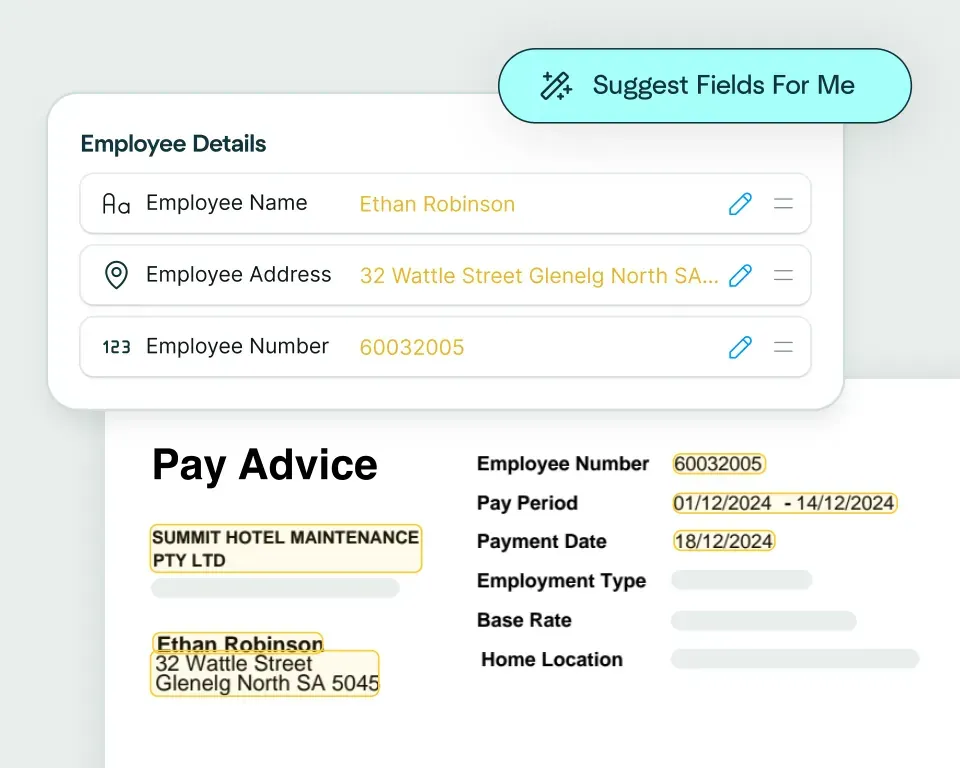
Create models in seconds
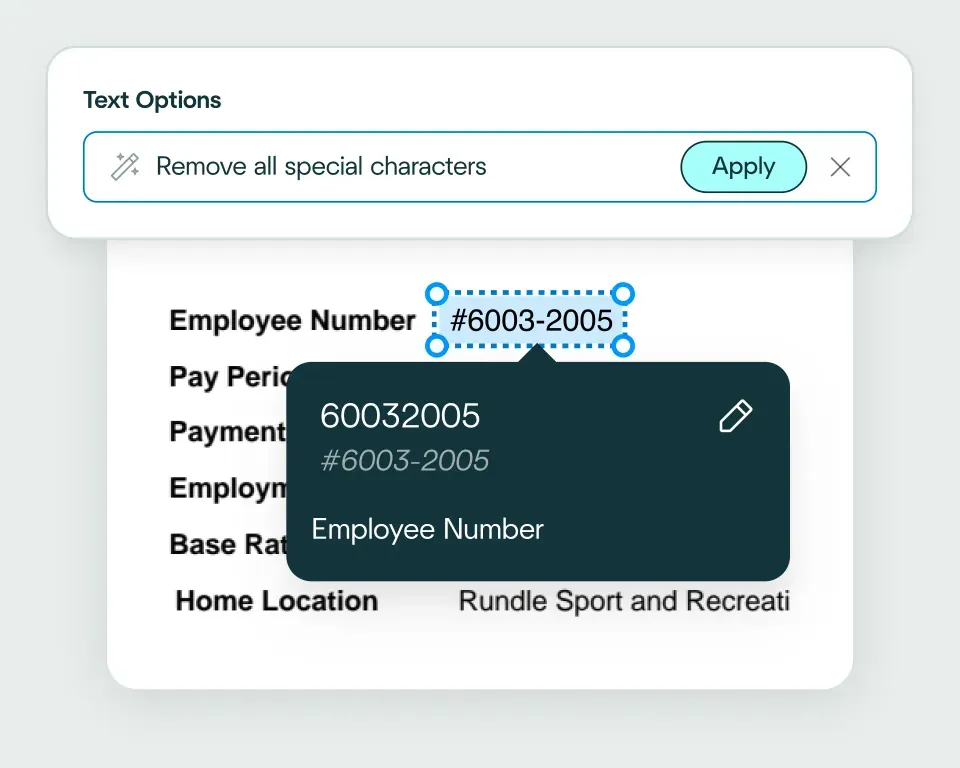
Validate and transform data
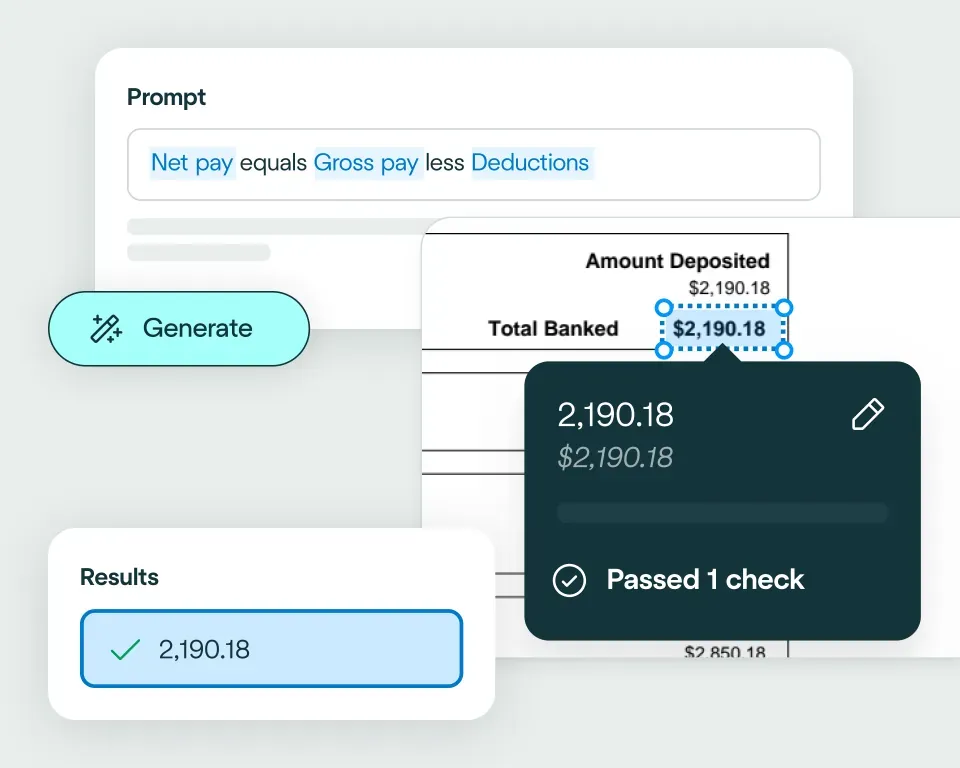
Apply your business logic
Pathway 1: Use the Agent
Pathway 2: Write your own code
What customer onboarding and KYC teams use AI document automation for
Identity verification
Proof-of-address
Form processing
AML screening
Risk scoring
Ongoing monitoring
No need to talk to sales. Get started now
Sign up for free
Upload documents
See the magic


reduction in manual work
more invoices processed with no added staff
Enhanced auditability and tracking of invoice approvals


proof of delivery documents processed annually
of documents straight-through processed in the first weeks
Automatic validation of documents against ERP system


High accuracy parsing across multiple languages
Improved customer experience thanks to better structured data
Stronger compliance with international data security and software standards


documents processed annually
different document types
time saved in reviewing invoices


reduction in manual data input
reduction in compliance data errors
compliance documents processed annually

Combine the best of artificial and human intelligence

Frequently asked questions
What should KYC software automate during customer onboarding?
KYC software should automate the document-heavy parts of onboarding: collecting and classifying files, extracting identity or entity data, checking required fields and routing incomplete or inconsistent records to compliance reviewers. The Affinda Platform speeds up onboarding by handling that document work, while the organisation's risk, screening and approval policies stay in the relevant KYC or compliance system – so it accelerates onboarding without skipping the compliance checks that have to happen. Explore the full customer onboarding and KYC use case.
How does automated KYC verification validate identity, entity and compliance documents?
Automated KYC document processing extracts details from IDs, forms and supporting evidence, then checks whether the required information is present and consistent. It can validate document data and flag exceptions, but it should not be described as replacing sanctions screening, identity-proofing services or the organisation's risk decision. Relevant document types include ID cards and KYC forms.
What is the difference between KYC OCR, KYC automation tools and a governed onboarding workflow?
KYC OCR reads text from onboarding documents, while KYC automation tools organise or move some of that data. A governed onboarding workflow goes further by classifying the documents, validating required fields, keeping values connected to their source, routing exceptions and delivering a confirmed customer record downstream. Read more about document automation for financial services.
Which documents are usually processed in KYC and customer due diligence workflows?
KYC and customer due diligence workflows often include identity documents, KYC forms, proof of address, company records, tax documents, bank statements and supporting compliance evidence. These usually arrive as a pack rather than one file, so the workflow needs to identify each document and apply the correct rules. See Affinda's supported document types and proof of identity examples.
How can KYC and KYB workflows route exceptions for compliance review before approval?
KYC and KYB workflows should route a record for review when required documents are missing, fields conflict, a validation rule fails or the evidence is unclear. The reviewer should see the source document, extracted value and reason for the exception before confirming the record. Clean applications can continue through straight-through processing without removing human control from higher-risk cases. This mirrors the wider compliance workflow.
How can KYC document data connect to CRM, core banking or compliance systems?
KYC document data can be sent into CRM, core banking, compliance, onboarding or case-management systems through APIs and configured integrations. Before the handoff, data transformations can normalise and map the fields to the target schema, while the Affinda Agent can help configure where confirmed data should go.