AI document processing for utility bill management
Describe your exact workflow
Automate utility bill management workflows end to end
Stop wasting time on manual processing
Accelerate document approval timelines
Improve accuracy, eliminate errors
Scale business without stretching teams
Built for compliance and data security
Extract any information from any document, fast
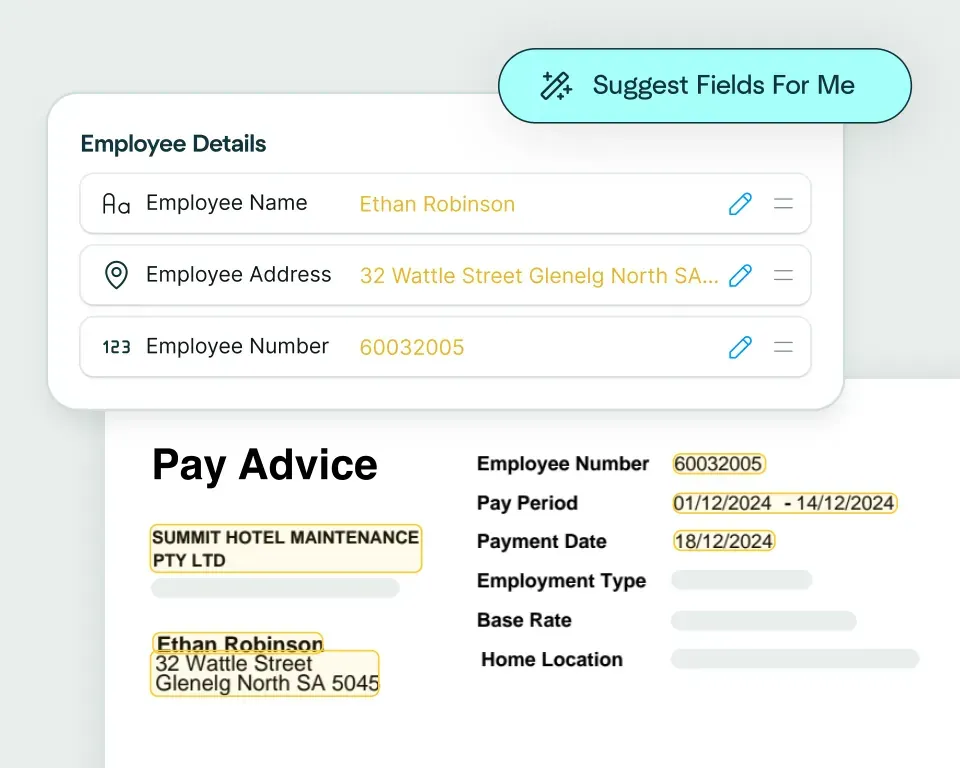
Create models in seconds
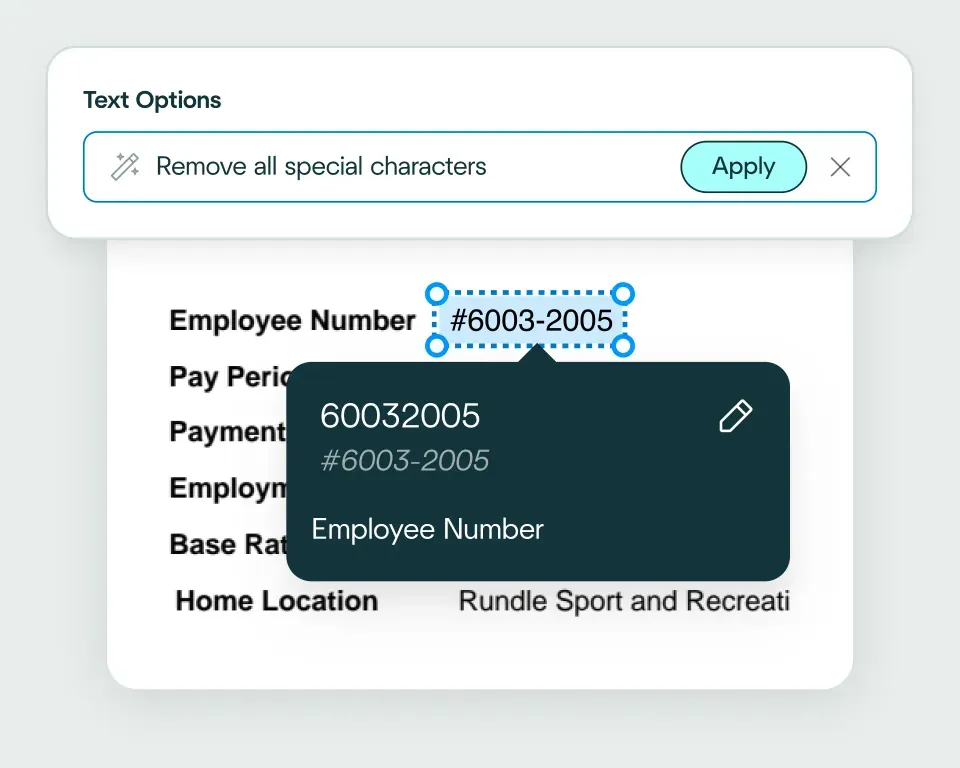
Validate and transform data
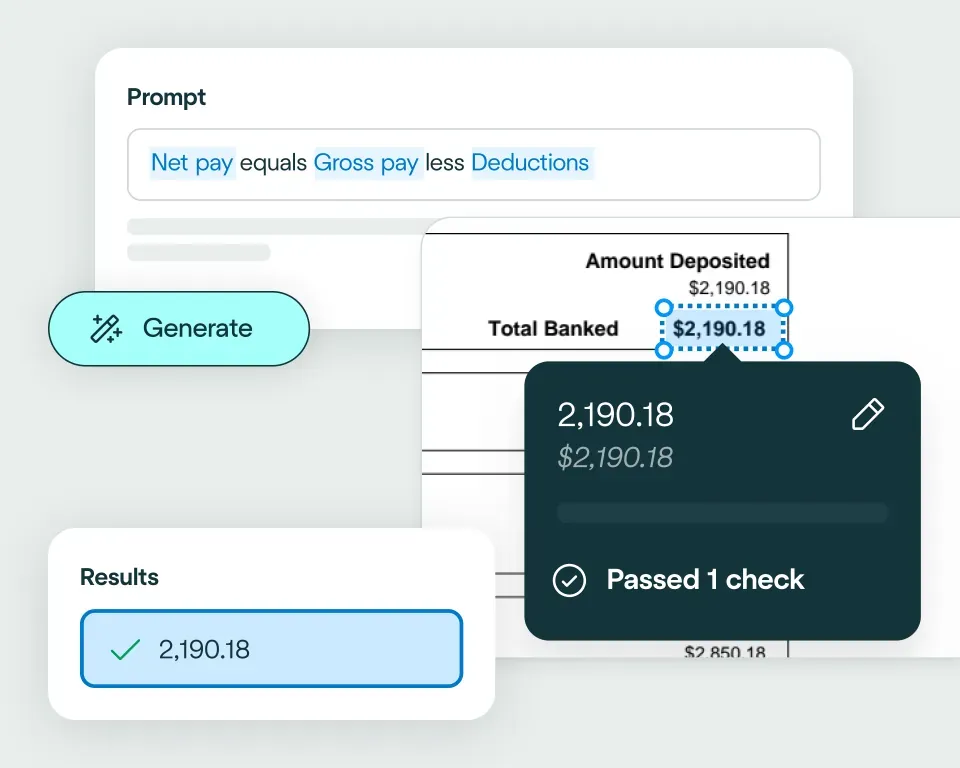
Apply your business logic
Pathway 1: Use the Agent
Pathway 2: Write your own code
What utility bill management teams use AI document automation for
Seamless bill processing
Accurate cost allocation
Trend analysis
Payment scheduling
Sustainability tracking
Exception handling
No need to talk to sales. Get started now
Sign up for free
Upload documents
See the magic


reduction in manual work
more invoices processed with no added staff
Enhanced auditability and tracking of invoice approvals


proof of delivery documents processed annually
of documents straight-through processed in the first weeks
Automatic validation of documents against ERP system


High accuracy parsing across multiple languages
Improved customer experience thanks to better structured data
Stronger compliance with international data security and software standards


documents processed annually
different document types
time saved in reviewing invoices


reduction in manual data input
reduction in compliance data errors
compliance documents processed annually

Combine the best of artificial and human intelligence

Frequently asked questions
What fields can be extracted from utility bills automatically?
Utility bill automation can extract supplier names, account numbers, billing periods, meter numbers, service addresses, usage, tariffs, charges, taxes, totals and due dates. The exact schema can be configured around the information a finance, property or operations team needs from each utility bill rather than forcing every bill into the same fixed template.
How can utility bill management software help finance teams validate recurring bill data?
Utility bill management software can check whether recurring bill data is complete, consistent and ready for reporting, approval or payment workflows. A configured workflow can flag unexpected charges, missing billing periods, mismatched accounts or unclear meter details for review instead of passing them into an ERP or reporting system unchecked. See the wider utility bill management use case.
What is the difference between utility billing software and utility bill document automation?
Utility billing software usually helps utility providers create and issue bills, while utility bill document automation helps organisations process the bills they receive. It extracts and validates the incoming document data on the Affinda Platform, then routes the result into expense, reporting or payment workflows. Learn more about how intelligent document processing works through use cases to see the potential impact utility bill automation can have on your team’s resources.
Can utility bill automation validate account numbers, billing periods, meter readings and charges?
Yes. Utility bill automation can apply format, completeness and business-rule checks to account numbers, billing periods, meter readings, usage, service addresses, taxes and charges. Where values need to be compared with known accounts or properties, data matching can check the extracted details against reference data and route mismatches for review.
How can finance teams process high volumes of utility invoices and bills?
Finance teams can process high volumes of utility bills by combining document intake, field extraction, validation rules, exception queues and downstream ERP or reporting-system delivery. Clean bills move forward with less manual handling, while unusual charges or missing information remain visible. Where the workflow also covers supplier invoices, the accounts payable use case provides the broader AP context.
Can the same document automation platform process utility bills, bank statements and payslips?
Yes. A configurable document automation platform can process several document types within the same organisation, including utility bills, bank statements and payslips. Each document type can have its own fields and validation rules while still using the same Affinda Platform for intake, review and delivery.
Can utility bill data flow into AP, expense or reporting systems?
Yes. Once bill data is extracted and validated, it can be sent into accounts payable, expense management or reporting systems through an API or configured integration. For teams handling utility expense management, that means charges, usage and account details land in the systems that drive payment and reporting, with data transformations shaping the output to match each schema.
How can finance teams keep an audit trail across automated utility bill processing?
Every extracted value can stay linked to the source bill, with a record of which validation rules passed, what was changed in review and who approved it. That gives finance and audit teams a traceable history rather than a black-box output, which matters when utility spend feeds reporting, accruals or payment. Values can also be checked against known accounts or properties using data matching before they post downstream, and clean bills continue through straight-through processing while exceptions stay visible.