AI document processing for insurance

How the insurance industry automates business processes with AI
Speed up claims and policy processing
Reduce errors and rework across complex workflows
Meet compliance and audit expectations with less effort
Extract any information from any document, fast
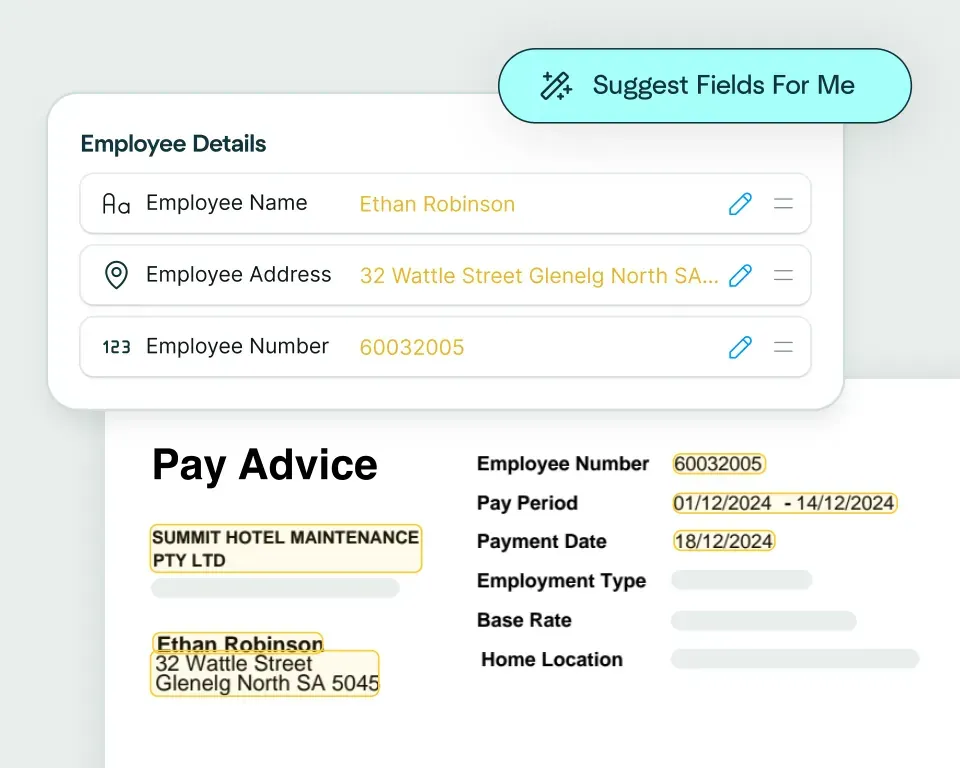
Create models in seconds
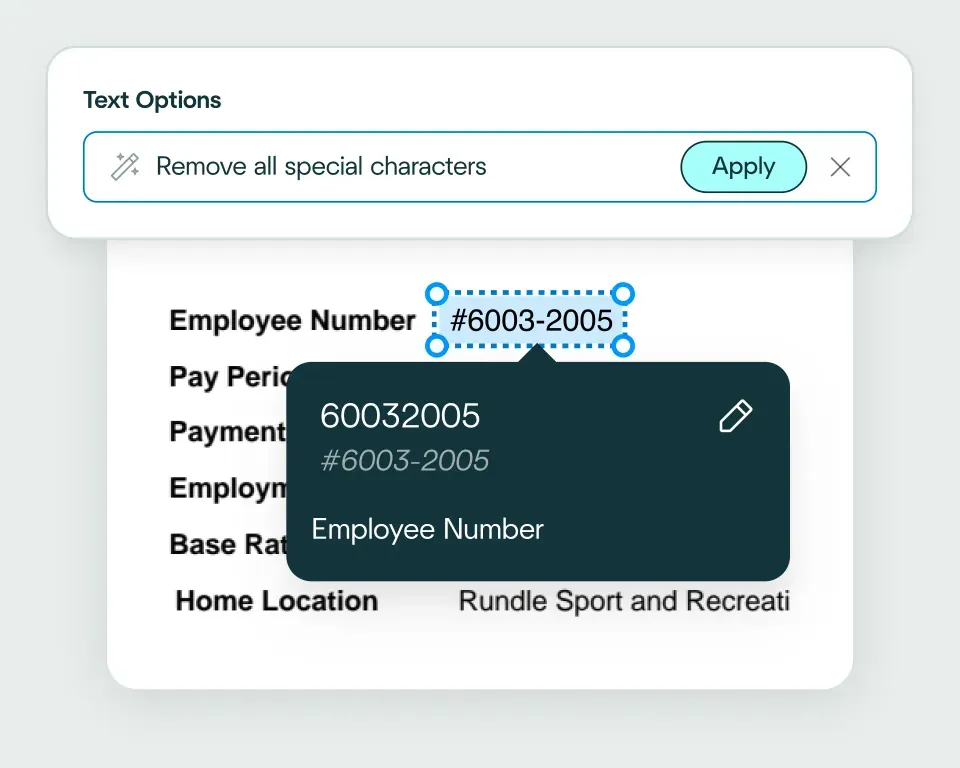
Validate and transform data
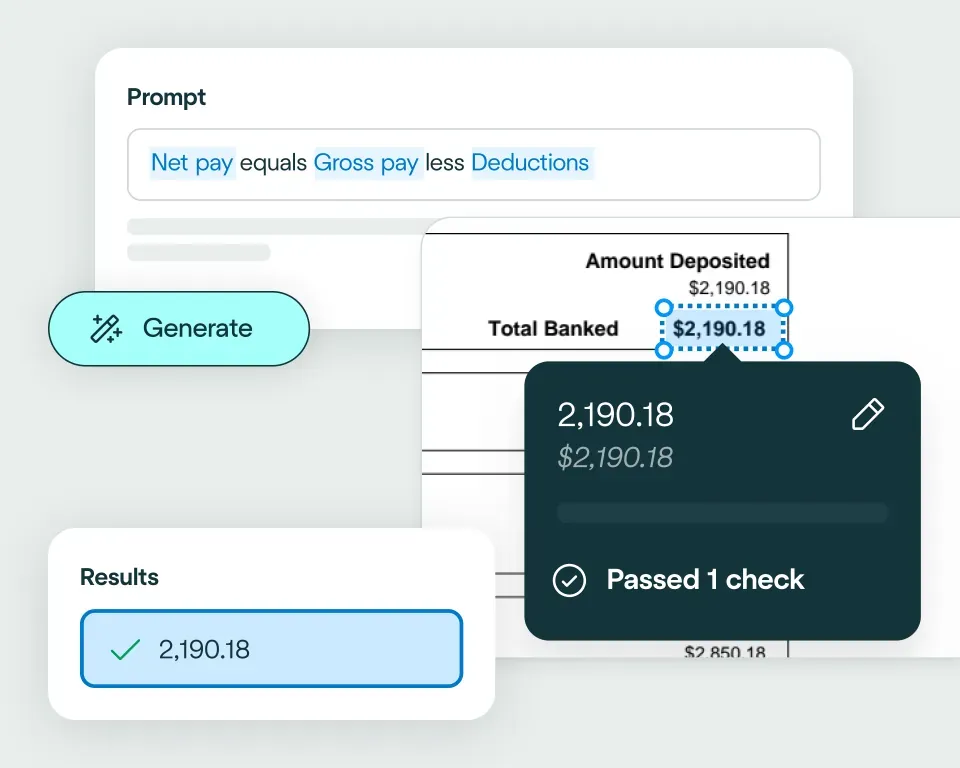
Apply your business logic
Pathway 1: Use the Agent
Pathway 2: Write your own code

No need to talk to sales. Get started now
Sign up for free
Upload documents
See the magic


reduction in manual work
more invoices processed with no added staff
Enhanced auditability and tracking of invoice approvals


proof of delivery documents processed annually
of documents straight-through processed in the first weeks
Automatic validation of documents against ERP system


High accuracy parsing across multiple languages
Improved customer experience thanks to better structured data
Stronger compliance with international data security and software standards


documents processed annually
different document types
time saved in reviewing invoices


reduction in manual data input
reduction in compliance data errors
compliance documents processed annually

Combine the best of artificial and human intelligence

Frequently asked questions
What is insurance document automation?
Insurance document automation turns submissions, policies, certificates, claims and renewal documents into structured, validated data for insurance workflows. What sets it apart from plain extraction is what happens around the data. The Affinda Platform grounds every value to its source, checks it against your validation rules and routes anything that fails to review – so teams act on policy and claims data knowing it's been verified, not just pulled off the page.
See how this runs across insurance workflows, or the guide to insurance document automation.
Which insurance submissions, claims and renewal documents can Affinda process?
The Affinda Platform can process broker submissions, claims documents, insurance certificates, policy schedules, endorsements, compliance records and renewal packs. These rarely arrive as single files – a submission or claim is usually a bundle – so the platform can split the pack, classify each document and prepare the extracted data for the submission or claims workflow.
See how this works for claims processing, including claim assessment reports and health insurance claims.
How can brokers and MGAs speed up submission intake without adding manual review?
Brokers and MGAs can automate intake by classifying submission documents, extracting the key fields and routing only incomplete or unusual items to review. That cuts the triage and rekeying that slows a quote, while the underwriting judgement stays with the team – automation handles the sorting and data entry, not the risk decision.
See how intake, validation and review fit together on the Affinda Platform, or the insurance document automation guide for more context.
How can claims intake automation reduce rework and missing information?
Claims intake automation catches required fields, supporting documents and inconsistencies at the front of the process, not after a claim has moved. The Affinda Platform extracts the claim details, validates them against your rules and flags what's missing or doesn't reconcile before it reaches an assessor – so the gaps that normally cause rework and back-and-forth are surfaced while they're still cheap to fix.
Explore our claims processing use case and support for claim assessment reports.
How is insurance OCR different from validated policy and claims data extraction?
OCR reads the text off a page – it tells you what the document says, not whether the data is right or usable. Validated extraction goes further: it turns insurance documents into structured data, grounds every value to its source, checks each field against your rules and routes exceptions for review. The difference shows up in production, where OCR leaves a team re-keying and re-checking, and validated extraction delivers data they can act on.
Read more on intelligent document processing in insurance and our data matching and validation capability.
Can Affinda handle certificates of insurance, schedules and endorsements?
Yes. Affinda handles insurance document types such as insurance certificates, policy schedules and endorsements, including the structured tables and variable layouts these documents are full of. That matters for schedules and bordereaux especially, where the layout shifts from insurer to insurer.
Our table extraction capability helps preserve row-and-column structure across formats, so the detail isn't lost on the way to structured data.
How can underwriting teams route exceptions for review before data reaches core systems?
Underwriting teams set the validation rules each submission has to pass, and anything that fails – missing, ambiguous or contradictory fields – is held for review with the source attached, before export.
Clean submissions continue through straight-through processing, while the items needing a judgement call stay visible to underwriters. Review is triggered by the checks that matter to your risk, so a person looks at the exceptions and routine data isn't held up behind them.
Can insurance document data integrate with policy admin, claims or broker platforms?
Yes. Affinda can pass validated data into policy administration, claims, broker, CRM or internal workflow platforms via API and configured exports. Teams can use the Affinda Agent to help set up export workflows with natural-language instructions, and data transformations shape the output to match the format each system expects.
What should insurers look for in intelligent document processing for commercial insurance?
Insurers should prioritise source-grounded extraction, configurable document types, validation, exception review, audit trails, integration and security. The reason the list matters in commercial lines specifically: submissions and claims are high-value, heavily bundled and heavily scrutinised, so the platform has to show where every figure came from and make review steps visible – not just extract quickly. That's the difference between data an underwriter can act on and data they still have to verify.
Explore the Affinda Platform, review our security posture, or read more on intelligent document processing in insurance.
How can commercial insurance teams improve auditability across submissions and claims?
Auditability comes from keeping every extracted field tied back to the source document and surfacing exceptions before export rather than after. The Affinda Platform supports this with source evidence on extracted values, validation against your rules and human review controls – so a submission or claim can be checked with the original document context attached. It means control is part of the workflow, not a reconciliation exercise you do afterwards.
See our data matching and validation and the broader platform capabilities.