AI document processing for healthcare and life sciences

How the healthcare and life sciences industry automates business processes with AI
Reduce admin burden on clinical and support teams
Improve data quality and reduce manual rekeying
Protect sensitive data and reduce risk
Extract any information from any document, fast
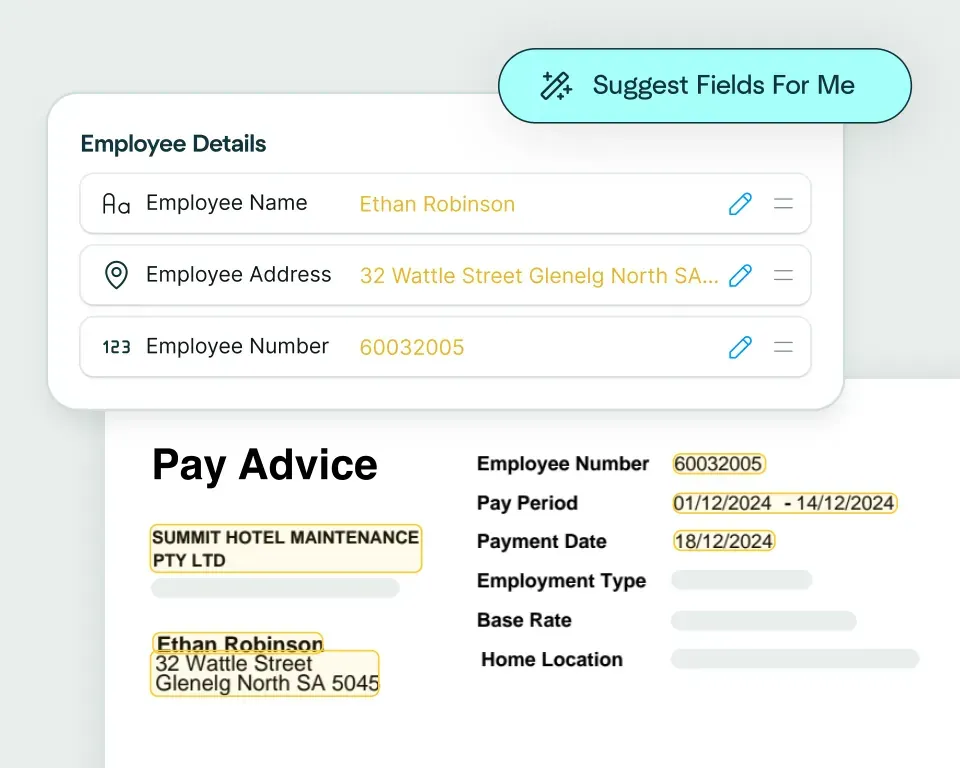
Create models in seconds
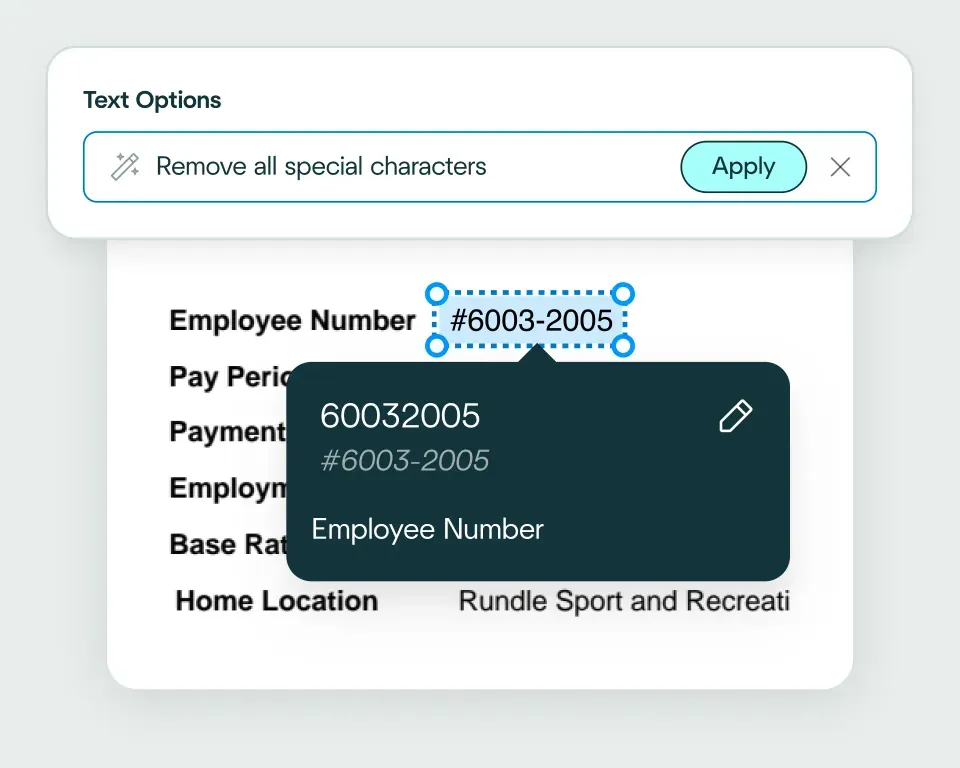
Validate and transform data
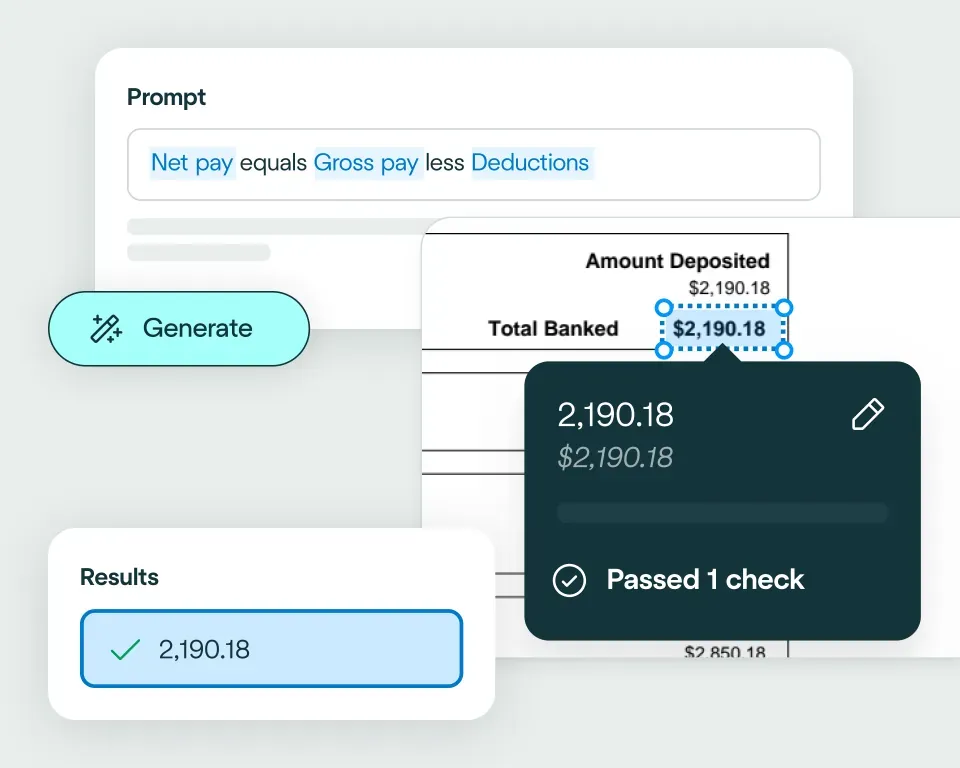
Apply your business logic
Pathway 1: Use the Agent
Pathway 2: Write your own code
No need to talk to sales. Get started now
Sign up for free
Upload documents
See the magic


reduction in manual work
more invoices processed with no added staff
Enhanced auditability and tracking of invoice approvals


proof of delivery documents processed annually
of documents straight-through processed in the first weeks
Automatic validation of documents against ERP system


High accuracy parsing across multiple languages
Improved customer experience thanks to better structured data
Stronger compliance with international data security and software standards


documents processed annually
different document types
time saved in reviewing invoices


reduction in manual data input
reduction in compliance data errors
compliance documents processed annually

Combine the best of artificial and human intelligence

Frequently asked questions
What is healthcare document automation?
Healthcare document automation turns administrative and clinical-adjacent documents – referrals, patient intake forms, insurance and compliance records – into structured data for intake, referral, claims and compliance workflows.
The value is in the paperwork around care, not the care itself: the Affinda Platform extracts and validates the data, can be configured to redact or flag sensitive fields, and routes exceptions to a person, while clinical judgement stays with your team. That's what makes it safe to automate – the admin burden lifts without automating decisions that shouldn't be.
Explore our healthcare document automation and security pages for more.
Which patient intake, referral and administrative healthcare documents can Affinda process?
Affinda can process patient intake forms, referrals, medical records, medical prescriptions, health insurance documents, compliance records and other administrative healthcare files.
These rarely arrive one clean file at a time. They come as mixed packs – often scanned or handwritten, and full of protected health information. Affinda can split and classify each document, extract the fields that matter, validate them against your rules, and prepare the data for downstream systems such as EHR or practice management platforms through the right integration.
How can patient intake form automation reduce manual admin?
Patient intake form automation reduces manual typing, document sorting and repeated checks by extracting patient and administrative fields at the start of the workflow. Affinda can help teams validate information, flag missing fields and prepare data for downstream review or systems.
How can referral documents and medical records be reviewed securely?
Referral documents and medical records can be routed through secure review workflows where teams verify extracted fields before downstream use. Our security page gives more detail on the controls behind secure document workflows, while clinical judgement remains with qualified teams.
How is medical OCR different from validated healthcare data extraction?
Medical OCR reads text from healthcare documents. Validated data extraction captures specific fields, grounds them to the source, applies checks and routes exceptions for review. Our data matching and validation capability and broader platform show how extraction, validation and review work together.
Can Affinda support health insurance claims and compliance documentation?
Yes. Affinda can support administrative workflows involving health insurance claims, compliance records and supporting documentation by extracting fields, checking completeness and routing exceptions. For insurance-related workflows, our claims processing use case shows how intake and review can work in practice.
How can healthcare teams validate patient or administrative data before downstream use?
Healthcare teams can set rules for required fields, format checks and review thresholds, then route exceptions for human validation before data moves into downstream workflows. Our data matching and validation capability and broader platform show how teams can control what happens before export.
Can healthcare document workflows support secure review and auditability?
Yes. Affinda supports secure review by keeping extracted data tied to the source document and making exceptions visible before export. Our security page explains key controls, while the Affinda Platform page shows how review and automation fit into the wider workflow.
What should healthcare technology teams look for in AI document processing software?
Healthcare technology teams should look for secure processing, configurable document types, validation rules, human review, auditability, integration options and clear workflow boundaries. Teams evaluating healthcare workflows can review our security and platform pages to understand the controls, configuration and review model.
How can healthcare organisations reduce back-office work without overclaiming clinical automation?
Affinda can reduce repetitive back-office tasks while keeping decisions and exceptions with the right teams. The gains are in administrative document work, not clinical decisions.
The Affinda Platform automates the intake and handling of referrals, claims support documents, compliance records and patient forms – classifying each document, extracting and validating the data, and routing it into your existing systems. Where a record is complete and passes your rules, it flows straight through; where something is missing, ambiguous or flagged for review, it routes to the right team with the source document attached. Clinical judgement and exception handling stay with your people.
The result is less repetitive data entry and faster turnaround on the administrative work that surrounds care, without automating decisions that shouldn't be.