AI document processing for manufacturing and heavy enterprise

How the manufacturing industry automates business processes with AI
Streamline procurement and supplier workflows
Reduce manual handling of production and documents
Keep audit records clean and compliant
Extract any information from any document, fast
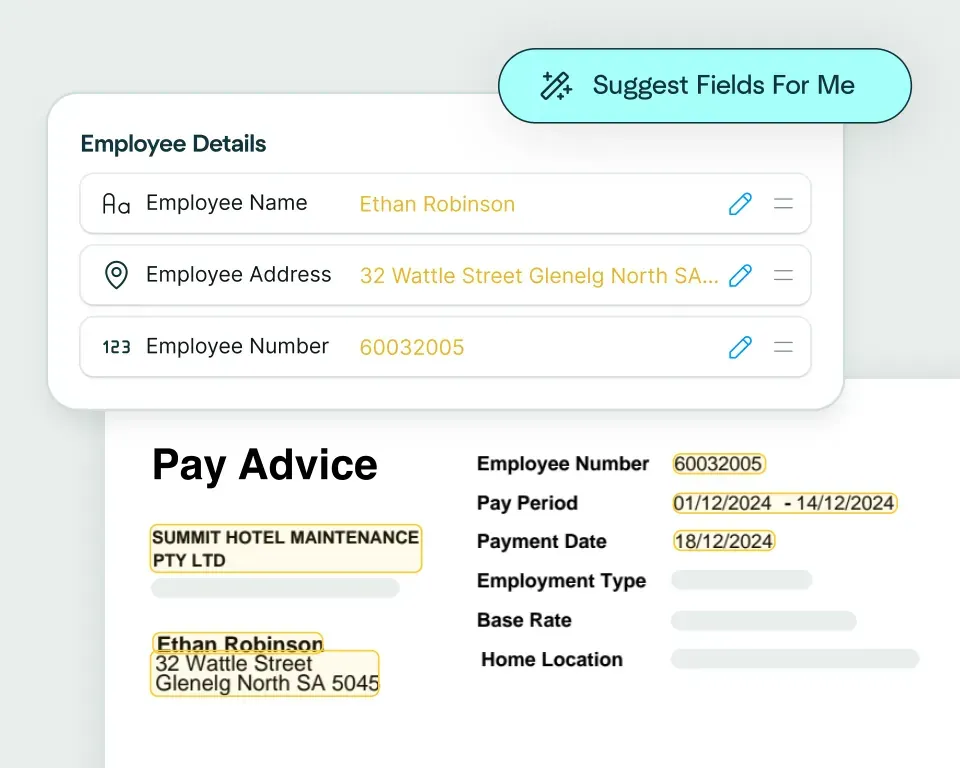
Create models in seconds
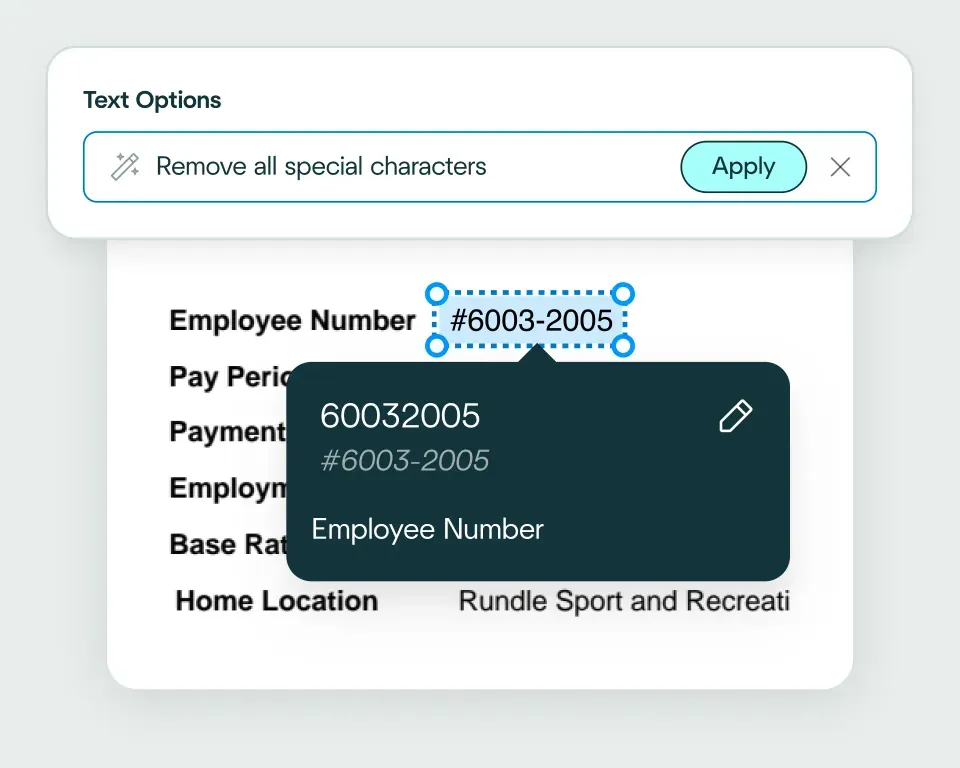
Validate and transform data
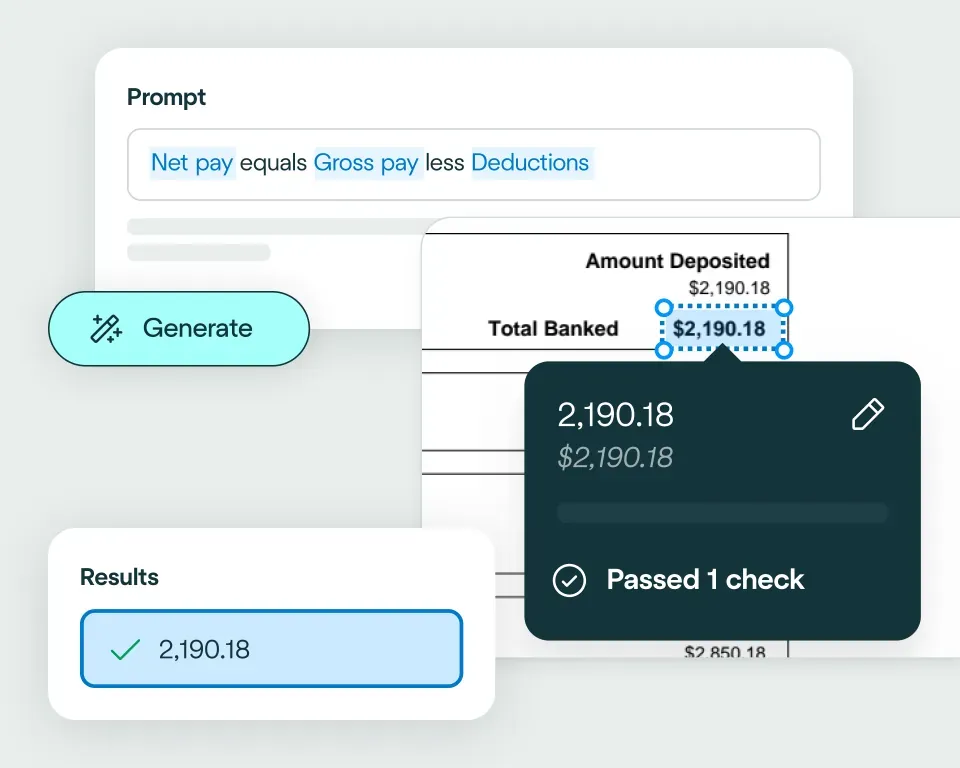
Apply your business logic
Pathway 1: Use the Agent
Pathway 2: Write your own code
No need to talk to sales. Get started now
Sign up for free
Upload documents
See the magic


reduction in manual work
more invoices processed with no added staff
Enhanced auditability and tracking of invoice approvals


proof of delivery documents processed annually
of documents straight-through processed in the first weeks
Automatic validation of documents against ERP system


High accuracy parsing across multiple languages
Improved customer experience thanks to better structured data
Stronger compliance with international data security and software standards


documents processed annually
different document types
time saved in reviewing invoices


reduction in manual data input
reduction in compliance data errors
compliance documents processed annually
Combine the best of artificial and human intelligence

Frequently asked questions
What is document automation for manufacturing?
Document automation for manufacturing turns supplier, procurement, quality and compliance documents into structured, validated data for operational systems. Affinda can extract fields, preserve source evidence, route exceptions and prepare outputs for ERP or QMS workflows. Manufacturing and operations teams can explore more about manufacturing document automation page or learn about automating purchase order management with AI in procurement workflows.
Which supplier, procurement and quality documents can manufacturers process?
Manufacturers can process supplier forms, purchase orders, invoices, packing slips, certificates of analysis, certificates of conformance, bills of materials, inspection reports and trade documents. These examples show how procurement, quality and supplier documents can feed the same workflow without turning the FAQ into a document catalogue.
How can supplier onboarding automation reduce manual document checks?
Supplier onboarding automation can extract registration, compliance, banking, insurance and certification details, then flag missing or inconsistent information for review. Our data matching and validation capability helps teams check supplier data against ERP or master data records.
Can Affinda extract data from certificates of analysis and certificates of conformance?
Yes. Affinda can be configured to extract product, batch, test, quality and certification fields from certificates of analysis and related conformance documents. For table-heavy quality records, our table extraction capability helps preserve the structure of test results and line items.
How can purchase order and packing list automation support ERP workflows?
Affinda can extract order numbers, supplier details, SKUs, quantities, shipment details and totals from purchase orders and packing documents, then prepare the data for ERP workflows. Our data transformations capability helps prepare ERP-ready outputs, and the guide to automating purchase order management with AI explains the procurement workflow in more detail.
How is manufacturing document processing different from OCR?
OCR reads text. Manufacturing document processing captures operationally useful fields, validates them and routes exceptions across procurement, quality and logistics workflows. The Affinda Platform shows how extraction, validation, review and export work together across the broader document workflow.
Can quality inspection reports and compliance records be routed for review?
Yes. You define the validation rules each record has to pass – required fields, tolerances, supplier or certificate checks – and any document that fails is routed to a reviewer with the source attached, before its data reaches your ERP, QMS or reporting systems.
Records that pass flow straight through. That means the exceptions that carry governance risk get a human check at exactly the point it matters, while clean data moves without manual handling. It's the same compliance workflow teams use to keep audit trails intact end to end.
Can manufacturing document data flow into ERP or quality management systems?
Yes. Affinda can export validated manufacturing data into ERP, QMS and workflow systems via API or configured outputs. Our data transformations capability helps format data for downstream systems, while data matching and validation supports reference-data checks.
What should manufacturers look for in AI document processing for compliance workflows?
Manufacturers should look for traceability in document processing, not just extraction. Compliance workflows run on certificates of analysis, inspection reports and supplier declarations, so manufacturers should look for tools that pull data from the tables these documents rely on and show the source behind every value.
The platform supports both grid and free-form tables, helping teams capture structured results across changing layouts and inconsistent formats. Then comes the layer that makes data defensible: validation rules that check each record against your compliance criteria, exception review for anything that fails, auditability, and integration into your ERP or QMS.
See how table extraction handles variable layouts, and our security page for the controls behind it.
How can document workflow automation reduce delays across procurement, quality and logistics?
Automation reduces delays by capturing data earlier, checking completeness and giving teams one path for clean-through files and exceptions. Our straight-through processing capability explains how clean documents can move forward with less manual effort, while the guide to automated invoice processing is useful when supplier invoices or AP workflows are part of the process.